

Ear Infection or Eustachian Tube Dysfunction:
What Is Causing the Pressure?
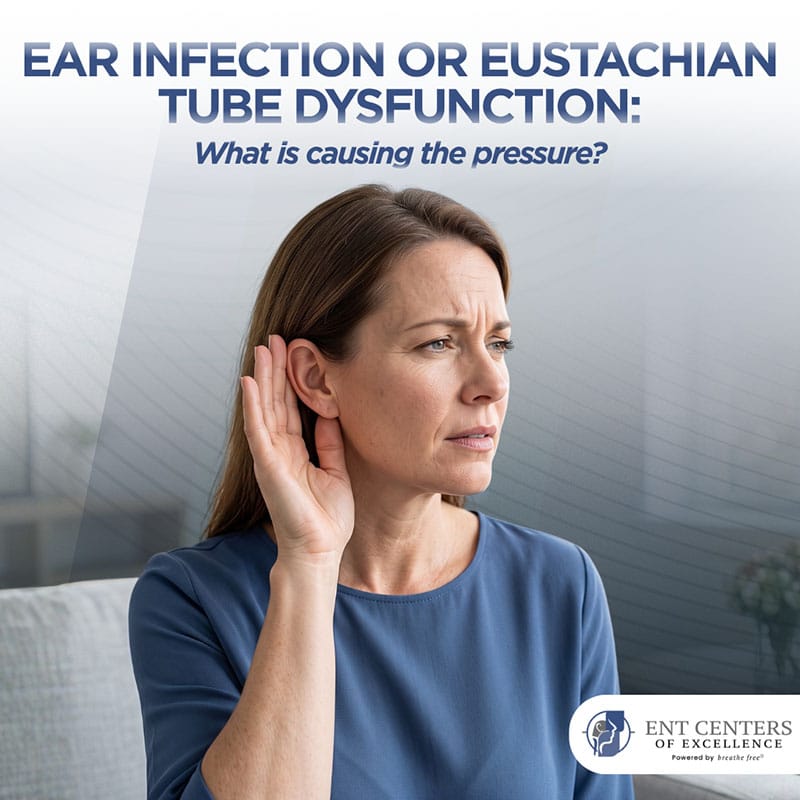
A clogged, pressurized ear can be surprisingly uncomfortable. It may feel like your ear needs to pop, sounds seem muffled, or there’s a constant feeling of fullness that will not go away. Because these symptoms often happen during or after a cold, many people assume they have an ear infection.
The problem is that ear infections and Eustachian tube dysfunction (ETD) can feel very similar, even though they are different conditions. At ENT Centers of Excellence, patients often come in thinking they need antibiotics, only to learn that pressure in the ear is being caused by inflammation or poor Eustachian tube function instead.
Understanding the difference can help you know when symptoms are likely to improve on their own and when it’s time for an ENT evaluation.
Why Does Ear Pressure Happen?
Your ears constantly adjust to changes in air pressure. The Eustachian tubes connect the middle ear to the back of the nose and throat, opening briefly when you swallow, yawn, or chew.
Their job is to:
- Equalize pressure behind the eardrum.
- Drain fluid from the middle ear.
- Keep the middle ear ventilated.
When these tubes are not working properly, pressure builds behind the eardrum. That pressure can feel almost identical to the early stages of an ear infection, even when no infection is present.
What Is Eustachian Tube Dysfunction?
Eustachian tube dysfunction happens when one or both Eustachian tubes become swollen, blocked, or do not open the way they should.
Instead of balancing pressure normally, the tubes stay partially closed. This creates a feeling of fullness inside the ear and can temporarily affect hearing.
People with ETD commonly notice:
- A plugged or clogged ear.
- Popping or clicking when swallowing.
- Muffled hearing that comes and goes.
- Pressure that changes throughout the day.
- Mild imbalance during pressure changes.
Symptoms often develop after a cold, during allergy season, or after flying or driving through changes in elevation.
What Does an Ear Infection Feel Like?
An ear infection affects the middle ear differently. Instead of pressure alone, infection usually involves inflammation and fluid caused by bacteria or viruses.
Symptoms are often more noticeable and may include:
- Ear pain that becomes worse over time.
- Fever, especially in children.
- Difficulty hearing because fluid is trapped behind the eardrum.
- Drainage from the ear if the eardrum ruptures.
- Feeling generally sick during the infection.
An ear infection may develop after a cold when fluid becomes trapped behind the eardrum and becomes infected.
How Can You Tell the Difference?
The symptoms overlap, but a few patterns can help distinguish them.
It may be ETD if…
- Your ear feels full but is not very painful.
- Swallowing or yawning temporarily changes the pressure.
- Symptoms started during allergies or after congestion.
- Hearing seems muffled, then briefly improves after your ear pops.
It may be an ear infection if…
- Ear pain is persistent or getting worse.
- Fever develops.
- Pressure is accompanied by significant discomfort.
- Fluid or drainage comes from the ear.
An examination of the ear can help distinguish between Eustachian tube dysfunction and an ear infection. Additional testing may be recommended when needed.
Why Does ETD Often Happen After a Cold?
A cold can irritate much more than your nose and throat.
Even after congestion improves, swelling around the opening of the Eustachian tubes may remain. The infection itself may be gone, but inflammation can continue preventing the tubes from opening normally.
This is why many people say, “My cold is gone, but my ears still feel clogged.”
For some patients, symptoms last only a few days. Others continue experiencing ear pressure for several weeks while the inflammation gradually settles down.
Can Allergies Cause the Same Ear Pressure?
Allergies can contribute to recurring Eustachian tube dysfunction and ear pressure.
When the lining of the nose becomes inflamed because of pollen, dust mites, mold, or pet dander, that swelling can extend to the Eustachian tubes. The result is pressure, popping, and muffled hearing without an infection.
Patients with seasonal allergies often notice ear fullness during allergy flare-ups, while those with year-round allergies may experience recurring symptoms throughout the year.
Can Fluid Stay Behind the Eardrum Without an Infection?
Yes. Fluid behind the eardrum is not always infected.
When the Eustachian tubes do not drain the middle ear properly, fluid can collect behind the eardrum and remain there after a cold or allergy flare has improved.
This fluid can cause:
- Muffled hearing.
- Ear fullness.
- Crackling or popping sounds.
- Pressure that lingers for days or weeks.
Because fluid and infection are not the same thing, treatment depends on what is actually causing the buildup.
How Does an ENT Diagnose Ear Pressure?
An evaluation from the right ENT clinic in Foley looks for the reason pressure is building inside the ear rather than treating every case as an infection.
Your provider will ask:
- When did the pressure start?
- Does it affect one ear or both?
- Did symptoms begin after a cold or allergy flare?
- Does swallowing change the sensation?
The examination may include looking at the eardrum, checking for fluid behind the ear, evaluating the nose and throat for inflammation, and performing hearing testing if hearing changes continue.
This helps determine whether the pressure is coming from ETD, an ear infection, fluid, or another ear condition.
How Are These Conditions Treated?
Treatment depends on the diagnosis.
If ETD is related to allergies or lingering inflammation, treatment may focus on reducing swelling around the Eustachian tubes. This may include prescription nasal sprays, allergy treatment, or saline rinses depending on your symptoms.
If an ear infection is present, treatment is directed at the infection itself. Not every ear infection requires antibiotics, and your provider will determine the most appropriate treatment based on your examination.
The goal is to treat the cause of the pressure rather than assuming every clogged ear is an infection.
When Should You Schedule an Evaluation?
Ear pressure often improves after a cold or temporary congestion. Persistent symptoms deserve a closer look.
Schedule an evaluation if:
- Ear fullness lasts longer than two weeks.
- Pressure keeps returning.
- Hearing remains muffled.
- Symptoms happen repeatedly during allergy season.
- Ear pain, fever, or drainage develops.
Recurring ear pressure can have several causes, and identifying the right one helps guide treatment. If you experience sudden hearing loss, especially in one ear, seek immediate medical attention rather than waiting for the pressure to resolve. Sudden hearing changes may require time-sensitive evaluation and treatment.
Don’t Assume Every Clogged Ear Is an Infection
A feeling of pressure inside the ear can come from an infection, but it can also happen when the Eustachian tubes are not working properly. Although the symptoms overlap, the treatment is not always the same. Identifying whether inflammation, allergies, fluid, or an infection is responsible is the first step toward lasting relief.
Schedule an appointment with ENT Centers of Excellence to determine whether Eustachian tube dysfunction, an ear infection, or another ear condition is causing your ear pressure.